Can you take a dental bridge out?
Dental bridges are designed to remain fixed in the mouth for many years after placement, so it should be impossible for you to remove your appliance without the help of a trained oral health professional such as one of the staff members at Chelmsford Dental Specialists Group. While some providers may refer to partial dentures as “removable bridges,” this is a misnomer since partials are designed to be easily removed by the patient for hygiene purposes. If you find that you are able to remove your bridge on your own, please contact our office so we can schedule you for an appointment for repairs.
How many teeth can a dental bridge replace?
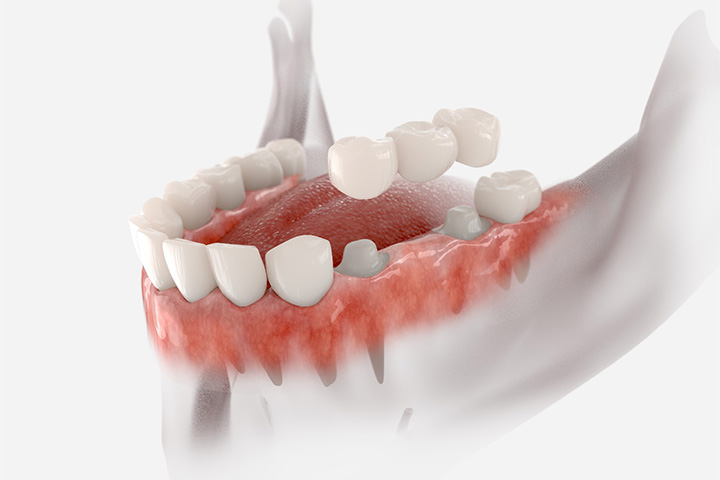
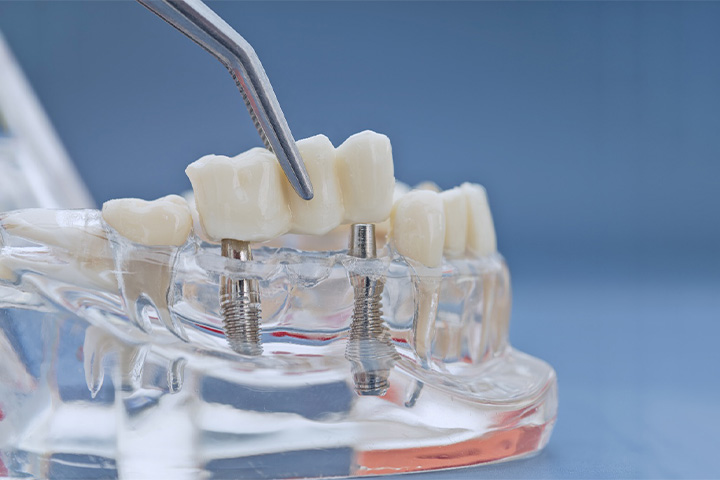
A dental bridge can replace one or more sequential missing teeth depending on the patient’s needs and how it is placed. Traditional dental bridges that are mounted on crowns placed on the healthy teeth on either side of the gap caused by tooth loss can usually support only one or two artificial teeth since anything more than that may compromise the stability of the device. Implant bridges, on the other hand, can replace three or more since they are supported by strong but small titanium rods surgically implanted into the patient’s jawbone. The team at Chelmsford Dental Specialists Group will be happy to determine the best way to replace your lost teeth when we see you for your consultation.
Can dental bridges be whitened?
The artificial teeth and crowns that make up a dental bridge cannot be affected by teeth whitening treatments since they are made from nonporous porcelain or resin materials rather than natural enamel. Receiving whitening after getting a bridge can leave your smile with an uneven color, so it’s probably best to whiten your grin before receiving a bridge so the device can be crafted to watch your smile’s gorgeous new hue. The staff at Chelmsford Dental Specialists Group will gladly help you understand how to achieve a complete and beautiful smile that you’ll be proud to show off.
Can dental bridges get cavities?
It is impossible for dental bridges to develop cavities since they are not made from organic enamel, but the natural teeth wearing the crowns that support a bridge can still be compromised by harmful oral bacteria. This can happen due to poor oral hygiene habits that allow food residues to accumulate along the seam between the crowns and the teeth, which will allow destructive germs to multiply rapidly. To prevent this, be sure to practice excellent oral hygiene by brushing and flossing daily and taking special care to clean beneath the bridge and along its seams. If your bridge is near the end of its lifespan, the cement securing it to your teeth may begin to erode, which can allow nasty bacteria to colonize the area and cause painful infections. We’ll be happy to replace it if this happens.